I. Dear Reader,
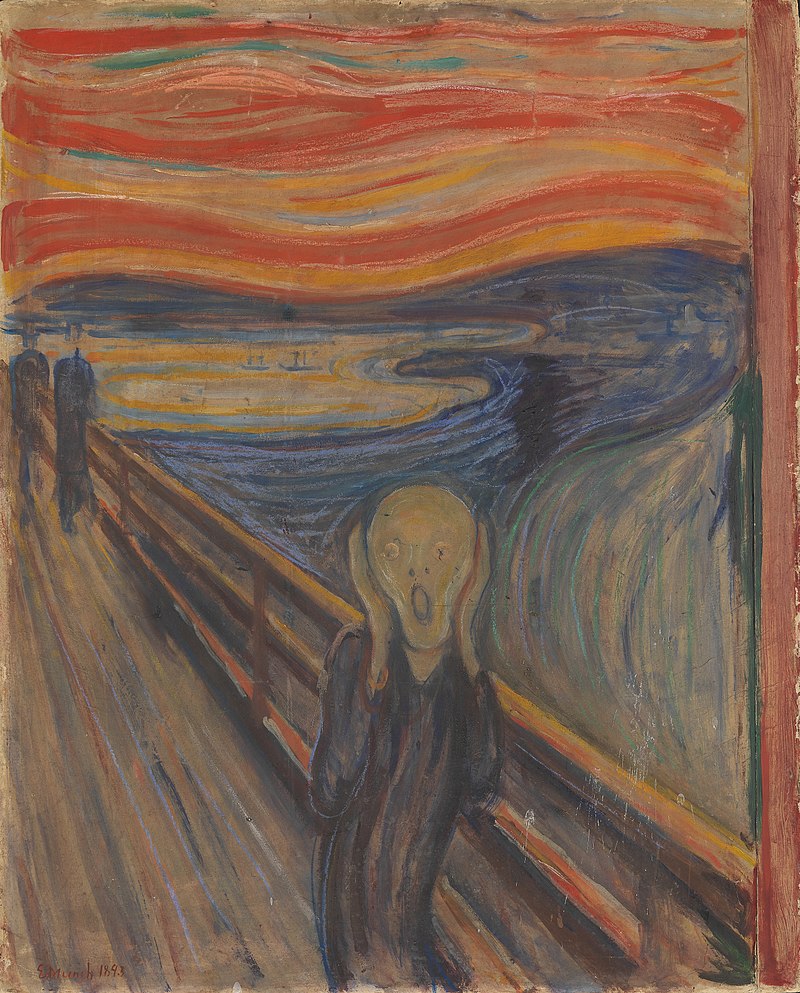
This week, there was a lot of buzz in indie RPG circles around jay dragon’s Expressionist Games Manifesto. You can see this as the culmination of jay dragon’s interest in RPG theory and experimental game design into this exploration about a specific type of game or approach to roleplay that she wants to promote.
There’s a lot to the essay but, in summary, these are games about the tension between the characters’ inner lives, the outside world, and the rules of the game. These are games about characters facing a harsh social reality mirrored by the players facing a harsh ruleset. For the characters to rebel, the players must as well.
These are the core principles of an expressionist game as laid out by dragon:
- In an expressionist game, every character possesses a rich and complex inner world.
- The rules cannot dictate the inner worlds of these characters.
- Instead, the rules abstractly simulate the social reality of the characters.
- The rules are mediated through friction between the text and the players.
- The players alternate between experiencing bleed, alienation, and tension.
But it’s not just about design, as dragon says:
An explicitly non-expressionist game can be played in an expressionist style by emphasizing the inarticulate inner worlds of the characters, identifying how the rules shape and restrict those inner lives, and playing explicitly into the game space where this restriction occurs until the game struggles and fails.
This led to a lot of interesting discussion as people either aligned with the manifesto’s goals or intentions or didn’t.
Natalie Pudim of Luck of the Harbor wrote a response articulating that she was primarily interested in the adjacent idea of “relationship games”. She argues that TTRPGs aren’t particularly well-suited to a lot of things like representing physical space or simulating action. She writes:
The strength of analog roleplaying games is in their ability to convey relationships in a way no other medium can. By allowing you to experience a relationship firsthand, it surpasses the constraints of language.
This is an interesting because if you take the framing of “what is a particular strength of tabletop RPGs” and apply it back to dragon’s manifesto, you get the idea that it’s the ability to break the rules.
Nael Fox captured some discussion of the manifesto on his blog from various discords as well as brought up the idea of Paranoia as an example of an older game that plays with these same goals:
In order to survive in Alpha-Complex the troubleshooters (here to shoot trouble) have to subvert and undermine the rules of the setting. In fact its a game where knowing the rules of the game itself is sometimes punished, and cheating them is at least tonally encouraged.
Paranoia is a game about the absurdity of rules and power (both in society and RPGs) so it seems like a very natural touch point here — despite probably being out of dragon’s usual sources of inspiration, which are the OSR and storygames.
Echoing this idea about using system to talk about The System, Isabelle M Ruebsaat wrote:
A real-life societal cage does not exist passively. It is maintained through community, oppression, rewards and punishments and incentives…We call it The System. An Expressionistic social cage within a TTRPG is fundamentally the same. It is something that is enacted, and which moves and grinds up against itself, and something whose nuances and incentives must sometimes be puzzled out and brought into the light.
Building on that, 200 Proof Games wrote about how from a design point of view, the manifesto is a call for games that build sub-text and “sub-textual mechanics”:
Just because something isn’t written plainly and clearly into the text doesn’t mean hasn’t been designed into the text all the same. Lying in wait between the lines, trusting that you are both clever and bold enough to prove it right. Designing subtextual mechanics, just like with any piece of context- and subtext-heavy art, is a practice of faith: Faith that your audience is paying close attention. Faith that they are not only present with your work, not only mentally engaged with it, but are actively impressing themselves upon it, seeking its pain points and hitches, critiquing it as they explore it, immersing themselves in each and every detail.
In both these situations, while the authors seem to talking about system, it’s worth noting that the expressionist manifesto isn’t interested at all in the system-setting split. When the manifesto uses the word “rule”, it means the stuff in settings, adventures, etc as well. While there are many different kinds of rules, the point is that they all provide texture to the play experience.
There have been fewer responses that I think engage with the other pillar of the manifesto: the internal lives of the characters. That commitment to the reality of the characters is, in my reading of the manifesto, the big claim it is making about how to play. When it cites the Boot Hill and the Fear of Dice blogpost, it does so not in the context of any thematic rules design but the power of approaching simple mechanics with a great depth of feeling. This aspect of the manifesto is what Zee Ham brings up in his post about getting lost in the woods:
Getting lost is something that is hard to do in a game, most RPGs elide the (often boring and stressful) realities of it. In doing so they also elide the tension, and the value. Sam Sorensen lays out in his article on legwork that there is no substitute for the designer. You have to put in the time to get the juice. This seems like very fertile ground for expressionist play, and exactly the kind of crunch I am looking for in a game. Detailed and deep imagined worlds, and passionate characters to grind against it.
Personally, I have a lot of different reactions. As a critic, I love having games that are about things, have points of view that we can discuss, have sub-text, and so on. As a player, I’m more or less disinterested in the metaphor of rebellion against the rules or the commitment to a character’s internal life. Not uninterested — I like the idea, I just like it as much as I like lots of things. Or to put it another way, I like more as a design manifesto than a play manifesto.
But that said, it is a great piece of writing and I really like the discussion. I love the idea of people trying to articulate what they enjoy. There’s also been a lot of a theory nerd-ery happening and I always enjoy that even if I’m not really participating in it!
Yours summarily,
Thomas
II. Media of the Week
- AA Voigt has a nice video talking about culture and setting in Wildsea
- You too can support the newsletter on patreon!
- If you’ve released a new game on itch.io this month, let me know through this form so I can potentially include it in the end of the month round-up.
III. Links of the Week
- At Rascal, we’ve got some interesting non-paywalled articles this week: a conversation about teaching RPG history in a classroom (with syllabus notes) and about a Canadian collective for game designers.
- Not a normal thing I share but I learned through the Rascal announcements that Ross Bryant of Dropout fame is running a Call of Cthulhu improv game with audience prompts?
- The Dicepool makes an Apocalypse Keys character and I’m reminded that I need to play that game again. It’s a real players’ game.
- Geeknative has some cool interviews. One with Josh Fox about upcoming gothic scifi game, Ex Tenebris. And another one with Tyler Crumrine about the three new games his publishing house is bringing out: “These are very different games thematically, but are all still distinctly Possible Worlds Games titles: they’re affordable, have original rulesets with unique, engaging mechanics, and lean heavily into collaborative worldbuilding—whether in collaboration with the text or with your fellow players.”
- Alex Rinehart has another fun interview with Jeff Stormer, game designer and host of Party of One.
- The blog Whose Measure God Could Not Take has a fun post about making physical treasure maps to give players. It’s one of those messy ideas I like a lot.
- The OSr blogosphere have been publishing posts about the media inspirations for their games and campaigns. There’s a ton if you look around but here’s a taste from elmcat which I’m sharing because One Piece is the first thing on the list.
IV. Small Ads
All links in the newsletter are completely based on my own interest. But to help support my work, this section contains sponsored links and advertisements. If you’d like your products to appear here, read the submission form.
- What if Warhammer got drunk in Gdańsk? Blunderbuss RPG is dirty, deadly, and divine. 100+ professions, brutal adventures, and rules so simple, anyone GMs.
- Surviving Strangehollow is an indie 5E supplement that brings together the wonder of a Jules Verne story and the mood of The Dark Crystal. Launching on GameFound 9/9/25.
- NOW LIVE! StoryGuider by TTRPGkids is an interactive choose-your-adventure coloring book for playing with kids ages 2-7! Check it out and help support on Backerkit!
This newsletter is sponsored by the wonderful Bundle of Holding. Check out the latest bundles below:
- So much Rifts! There’s the Rifts Core Megabundle, Rift Worlds 1, Rifts Worlds 2, Rifts Land and Sea, Rifts Coalition Wars
Hello, dear readers. This newsletter is written by me, Thomas Manuel. If you’d like to support this newsletter, share it with a friend. If you’d like to know more about my work, check out the coolest RPG website in the world Rascal News or listen to me talking to other people on the Yes Indie’d Podcast.


 Indie RPG Newsletter
Leave a reply to #02 – Convertir el juego en medio ⛅ – piedrapapeld20 Cancel reply