I. Dear Reader,
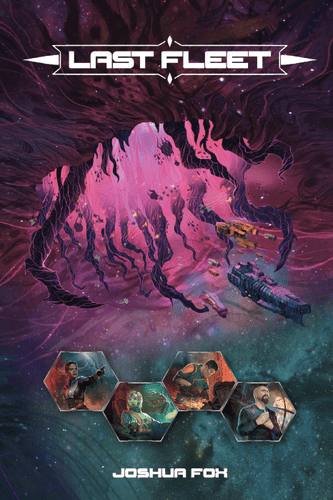
My single favourite bit in Last Fleet, the PbtA space opera from Black Armada Games, is the move, Pull Strings. Last Fleet is a big 200+ game inspired by Battlestar Galactica that yearsn for same tense, claustrophobic air of the TV show. The last of humanity is in one fleet escaping an alien threat. While there’s a lot of space out there in the universe, there’s very little within the fleet itself. Resources are stretched but shared. People lean on each other as everyone works to survive.
This is a tricky thing to translate into a game and so we get a move like Pull Strings. Here’s the text:
When you Pull Strings on the fleet, say who you’re going to for help and what you want them to do, and roll +Smooth.
On a Hit choose one:
✦ Gain help with a specific task from an NPC or group […]
✦ You gain temporary access to rare or restricted equipment, resources, skills,or information.
✦ Change people’s behaviour on the fleet at large (curfew, rationing, calm rioting, etc).
On a 7–9, the GM chooses two:
✦ You can’t do it without help from someone you you’d rather not get involved with.
✦ Someone demands a favour in return, or else they won’t help.
✦ You attract unwanted attention.
✦ There’s an unexpected cost or consequence.
Pull Strings is your default “problem-solving” move, i.e., when you have a problem and you don’t know how to solve it, you probably need to roll this move. Want an audience with the admiral? Pull strings. Want resources to be moved from this group to your group? Pull strings. Suspect someone’s an infiltrator and want to get them alone? Pull strings. Basically, your character wants things and there’s no real way to do anything except through other people.
This is tricky to do because you actually have to fictionally or mechanically disempower the characters to make it so they need people. They’re not busting down doors, charming people’s pants off, or whatever else. It’s not something you can port over to some other game just like that.
In this game the end result is that the fleet quickly becomes a place where everything – every good and every service, every function and every institution – gets a face associated with it. You’re constantly creating NPCs and back-filling some kind of history with them which results in the fleet blossoming into life. All of these people end up wanting something in return – could be something related to the ongoing agenda of the players or some other diverging micro-narrative. Regardless, it makes the fleet look dynamic and bustling, like every single person is living through their own story. It creates a world where even as humanity faces extinction, it remains vital.
Yours movingly,
Thomas
II. Media of the Week
- I enjoyed this video by Dave Thaumavore about why he loves the Forbidden Lands setting.
- Please consider joining 100+ other patrons and support the newsletter on patreon to help keep me going.
- If you’ve released a new game on itch.io this month, let me know through this form so I can potentially include it in the end of the month round-up.
III. Links of the Week
- These are tough posts to write so I appreciate whenever someone tries: an overview of travel procedures across a bunch of old school fantasy games like OSE, Shadowdark, etc.
- I’m a big fan of limited series (4-12 sessions) and this post by Silver Arm Press explains why they’re a great default.
- Deeper in the Game has another really cool theory post – even its diversions are interesting. It’s about the “mechanical-fictional spectrum“: “Mechanical Limiting: This is when the choices you have are hard limited in the game. It is designed, and intended, that you can only pick from this limited set of choices, that there is no options outside of it.”
- Jo Lindsay Walton has been writing about utopias and TTRPGs for a while now and has recently put together a collection of academic essays on the topic, featuring a number of games. It’s called Utopia on the Tabletop and you can get it for free.
- Glumdark is a new random generator for rolling up a bunch of different stuff – from a scifi ship to a weird fantasy location.
From the archive:
- On Legacy of the Bieth, Humza wrote a good post titled productive scab-picking: on oppressive themes in gaming: “If the fictional worlds we’re envisioning are to have axes of oppression within them, then the least we can do is put time and effort into making sure those worlds are thoughtful and deliberate, that the scab-picking is productive.” (Issue 39, May 2021)
IV. Small Ads
All links in the newsletter are completely based on my own interest. But to help support my work, this section contains sponsored links and advertisements. If you’d like your products to appear here, read the submission form.
- ION Heart, our cozy solo mech TTRPG launches next Tuesday 16th July. Follow the Backerkit here and we’ll send you a QuickStart to try before we blast off. 🚀
- Hunt(ed/ed) is a fast-paced, two player TTRPG about a Hunter and the Monster they are pursuing, written by Dillin Apelyan (Superdillin) and Meghan Cross (meghanlynnFTW,) coming to Kickstarter July 15!
This newsletter is currently sponsored by the Bundle of Holding.
- Grab everything for Spirit of 77, the RPG about playing in a weird alternate reality 1970s.
Hello, dear readers. This newsletter is written by me, Thomas Manuel. If you’d like to support this newsletter, share it with a friend or buy one of my games from my itch store. If you’d like to say something to me, you can reply to this email or click below!


 Indie RPG Newsletter
Leave a reply to zircher Cancel reply