I. Dear Reader,
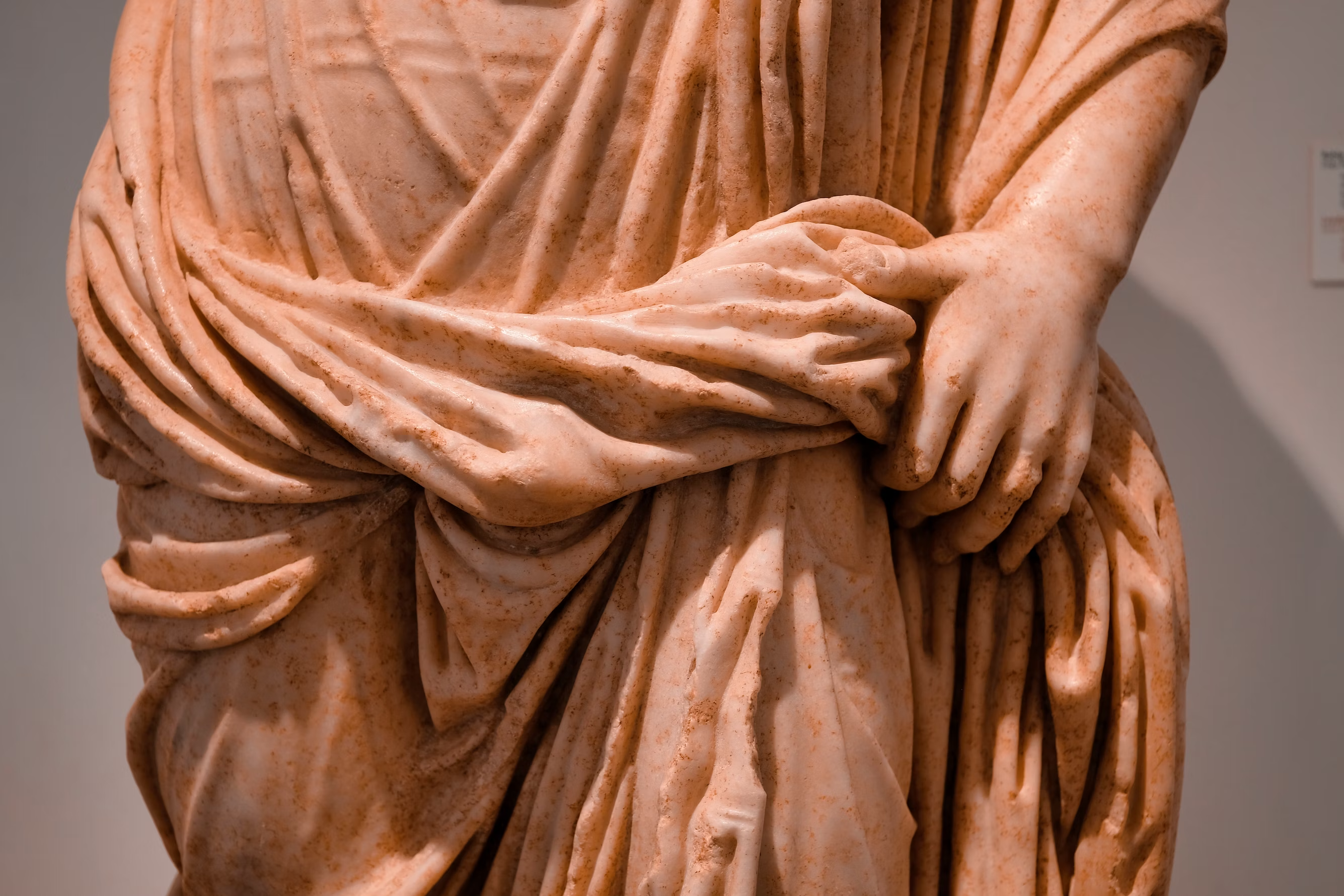
The problem with asking if games are art is that the answer can be as simple and as complicated as you have time for. In some sense, anyone trying to be stingy about what qualifies as art is fighting a battle that was decided a long time ago. Today, anything can be art if you’re willing to give it your attention and let it move you.
The more interesting question when it comes to tabletop games is, which art are you talking about?
The most common is the art in the books – beautiful illustration and beautiful writing that makes an RPG book an “art book”. I was recently posting on the site formerly known as twitter about how momatoes’ ARC was a work of art. As evidence, I posted screenshots of the PDF. The pages were filled with art, words, and layout that was dark but not scary, a kind of modern fairytale aesthetic that hints at hidden depths. Like a sculpture where marble looks like cloth, it’s a feat of technical skill that can both humble and inspire you.
Then, there’s the art of playing RPGs. This is a tricky one because there’s lots of things this isn’t: this isn’t acting, this isn’t the same as performing in an actual play. It’s adjacent to performance but not exactly the same and its importance varies across playstyles. But if comedy is an art, then people are busting their gut laughing in their games. If drama is an art, well, often it’s much more moving when someone you know adds the slightest quiver to their voice than when someone in a movie bursts into tears in the rain as a violin plays in the background. Sometimes its just knowing who or when to pass the ball to, and doing it deftly.
And then, there’s the art of design. Which I think Robin Laws referred to as “the hidden art”, though that is probably a little controversial. It’s not exactly writing, it’s more about what or how to write. It’s not exactly the sum total of everything that goes into a book. In some games, the bulk of the design is just the premise. The rest is left to the players. In some games, it’s carefully choreographed ritual. Eithery way, like all art, most of it will leave you cold but some of it can grab you and change you.
Yours artfully (and craftfully),
Thomas
II. Media of the Week
Nothing this week!
Please consider joining 60+ other patrons and support the newsletter on patreon to help keep me going.
If you’ve released a new game on itch.io this month, let me know through this form so I can potentially include it in the end of the month round-up.
III. Links of the Week
A good interview with Tim Denee, designer of the new Battle Royale-inspired game, Deathmatch Island.
Rise Up Comus talks about why he used tarot for his OSR megadungeon crawler, His Majesty The Worm.
On Polygon, a nice feature on the D&D AP, Transplanar, “an all-transgender, people of color-led dark fantasy TTRPG show set in an original noncolonial, antiorientalist multiverse”.
Another round-up of great RPG mechanics, including how The One Ring does journeys, how Exalted does Loresheets, how Fate of Cthulhu does shifting timelines, and more.
It Came From The Bookshelf talks about another interesting transhuman Eclipse Phase supplement, Sunward.
Wyrd Science, the tabletop magazine, has made its first four issues free as they get ready to crowdfund their fifth issue.
IV. Small Ads
All links in the newsletter are completely based on my own interest. But to help support my work, this section contains sponsored links and advertisements. If you’d like your products to appear here, read the submission form.
Roleplaying doesn’t have to finish at the table. Don’t Play This Game combines journaling, crafting and LARP. Back now on Kickstarter for a terrifying solo experience.
Tiny Library: Modern Fantasy is a deck of 51 single-card RPG fragments from 51 different creators. That’s a huge amount of diversity and pure creativity on the tabletop.
The Central Market is full of shops to add to your next 5e shopping session. With 30 shops from fishmongers to tattoo parlours with item tables, plot hooks and backgrounds.
Do you remember & love the D&D Endless Quest books? Check out Rediscovered Realms’ brand new exclusive interview with Rose Estes, the creator and original author (while it’s still free!)
This newsletter is currently sponsored by the Bundle of Holding.
Two bundles for Kult: Divinity Lost, there’s the core collection and a bundle of supplements.
Hello, dear readers. This newsletter is written by me, Thomas Manuel. If you’d like to support this newsletter, share it with a friend or buy one of my games from my itch store. If you’d like to say something to me, you can reply to this email or click below!

 Indie RPG Newsletter
Leave a reply to Jesper Cockx Cancel reply