you come to me on the day of the release of my game
I. Dear Reader
So a very long time ago, in the distant mists of 2021, I played a game of Crash//Cart and have been thinking about a deck of playing cards as the engine of game ever since. That game started me down a whole path of new designs, leading to a series of games that I’m referring to as my Cardsharp Sonata.

The first game of that series is now out. It’s called This Ship Is No Mother and it’s basically Dread meets Mothership via a deck of cards. It’s scifi horror with a ticking clock. Race against the deck to save your friends and earn a salary in the infinite sprawl of spaace.
It uses a simplified Forged in the Dark ruleset that my playtesters – ranging from teenagers to senior citizens – have all been able to pick up and enjoy. Honestly, my most satisfying GMing experiences this year have come playtesting this game. It’s made me feel like a real designer! And I’m genuinely so excited to share it with you.
It’s about 50 half-pages, full of art from Justin Nichol. You can use it to run adventure modules from other games (like Mothership!) or follow my format to prep your own one-shots. I’m experimenting with an adventure format that is basically a list of consequences. (It won’t work for everybody but it’s literally how I prep and run games!)
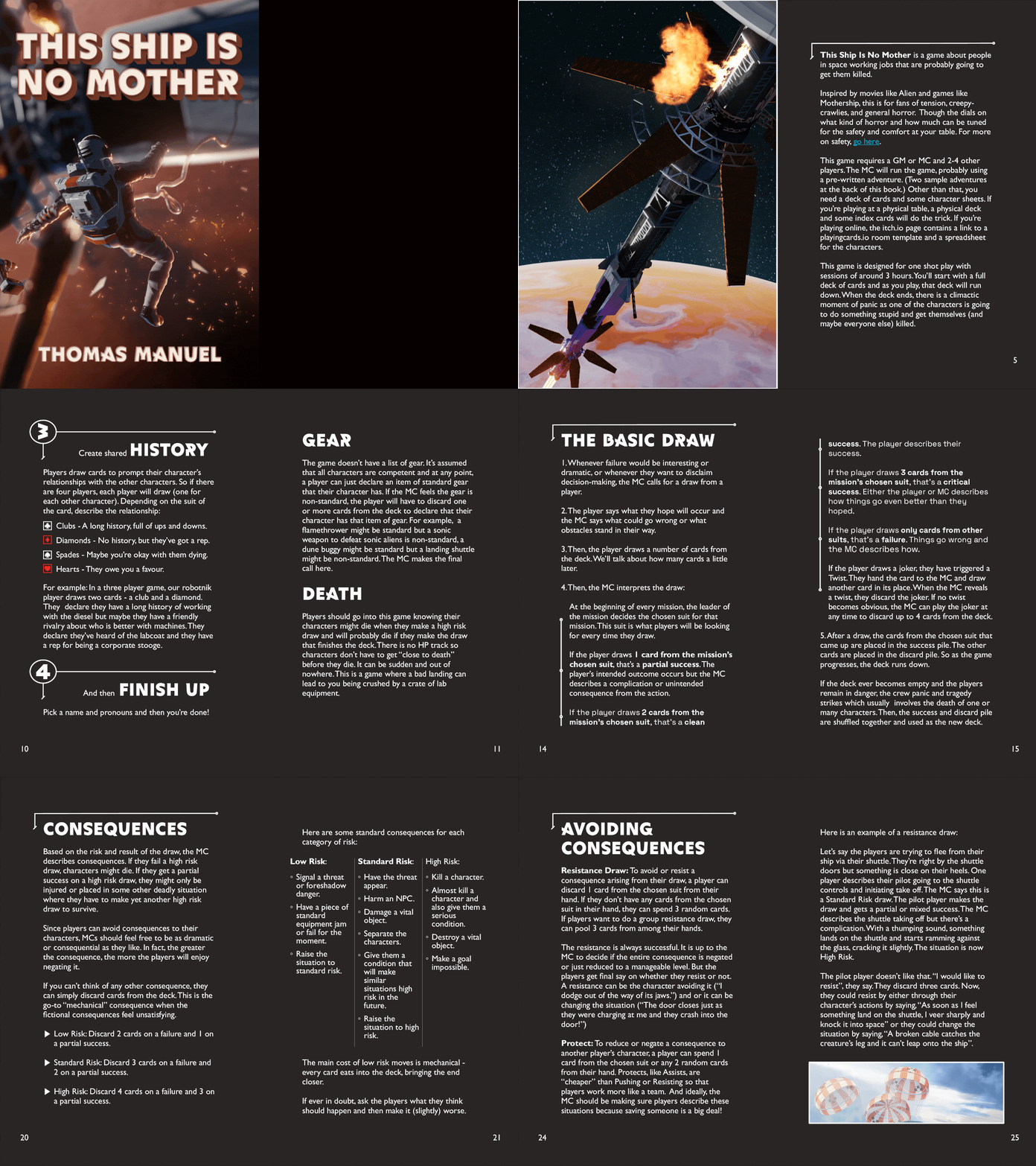
If you’re looking for a new game, I’d love for you to check it out!
Yours on release day,
Thomas
II. Media of the Week
On the Yes Indie’d Podcast, I chat with Chris Chinn, who’s been writing about RPGs for 15+ years on his Deeper in the Game blog. While he’s most famous for the Same Page Tool, the blog has so much to offer someone who wants to do more with games, like this great, recent post. It’s a great conversation about playing RPGs as a geek of color, learning how to ditch the railroad and embrace improvisation, and advice for new bloggers.
This is Sidney Icarus breaking down their theory about how players approach games called Action Paths. It breaks four different approaches based on the options players believe they have and so on. I think my favourite part is the last section where Sidney talks about how when you’re doing a jigsaw puzzle, you might go through all four paths as you figure the puzzle out.
Please consider joining 50+ other patrons and support the newsletter on patreon to help keep me going.
If you’ve released a new game on itch.io this month, let me know through this form so I can potentially include it in the end of the month round-up.
III. Links of the Week
Reviews
Clayton Notestine of Explorer’s Design writes an electric review of Dungeon Crawl Classics:
Then, one night, while I tossed in a cold sweat. I muttered in my sleep. “Kerning. Leading. Margins. Paper. Pulp.” And that’s when I remembered. All those old books were shit, weren’t they? Are “mistakes” an irreducible part of the genre? Would fixing the bad font choices, kerning, and design gaffs make it feel false?”
On CBR, a not-very-positive review of official Marvel roleplaying game.
On Gnomestew, a thorough review of Pendragon 6e’s new starter set.
Articles
On Mazirian’s Garden, Ben L talks about how spotlight management intersects with the OSR playstyle.
On All Dead Generations, Gus L chews on 7 common maxims of the OSR (for example, roleplaying not rollplaying, rulings not rules, etc) and expands on each of them beautifully.
On Githyanki Diaspora, Judd Karlman daydreams about making hyperspace interesting for his scifi Traveler game.
On his blog, Ben Robbins remembers (and plays) Remember Tomorrow, a cyberpunk-ish game by Gregor Hutton.
On Burn After Reading, a sequel to the first post about bad player habits and how to avoid them.
On Dicebreaker, tabletop designers commiserate on the “enshittification” of twitter.
If you like data and visualizing it, here’s an attempt at building a visual timeline of RPGs. You can contribute to the project via git if you’d like!
IV. Small Ads
All links in the newsletter are completely based on my own interest. But to help support my work, this section contains sponsored links and advertisements. If you’d like your products to appear here, read the submission form.
Bump in the Dark is a thrilling FitD game about community, chosen family, and beating the shit out of monsters. Now available in paperback and hardcover from DriveThruRPG!
Get a FREE full-length 5e adventure when you follow our Kickstarter prelaunch page. You will be notified when it goes live, and “A Deadly Duet” becomes available to download.
This newsletter is currently sponsored by the Bundle of Holding.
From dicegeeks, a series of sourcebooks for various historical times and places.
Hello, dear readers. This newsletter is written by me, Thomas Manuel. If you’d like to support this newsletter, share it with a friend or buy one of my games from my itch store. If you’d like to say something to me, you can reply to this email or click below!

 Indie RPG Newsletter
Leave a reply to Hendrik ten Napel Cancel reply